

The British Museum. The BT Tower. John Maynard Keynes’ House. Harry Potter’s secret train platform. These are just some of the sights you can see on an afternoon wander through Sir Keir Starmer’s old constituency, before taking in an evening show at Sadler’s Wells theater or the Camden Roundhouse.
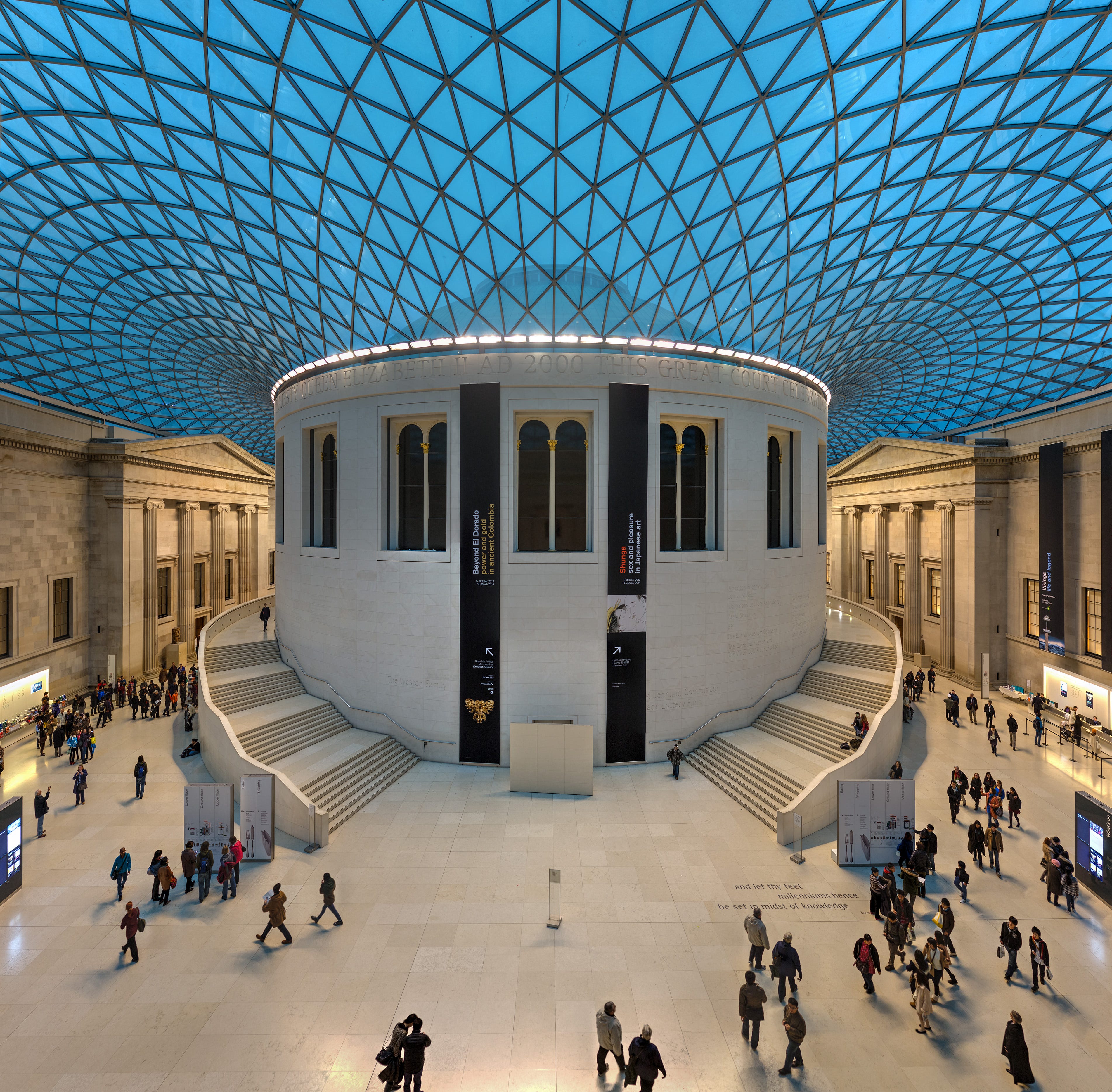
Not many constituencies have one of these
Holborn & St Pancras is not just a London seat, it is a “London: Global City” seat. A world renowned hospital. A world class university. An international rail terminus. Museums and theatres, large and small. Restaurants offering food from around the world, music venues staging bands from around the world, bars that open all night, seven days a week. Most of the people roaming the streets don’t live here, and most of the people who live here came from somewhere else.
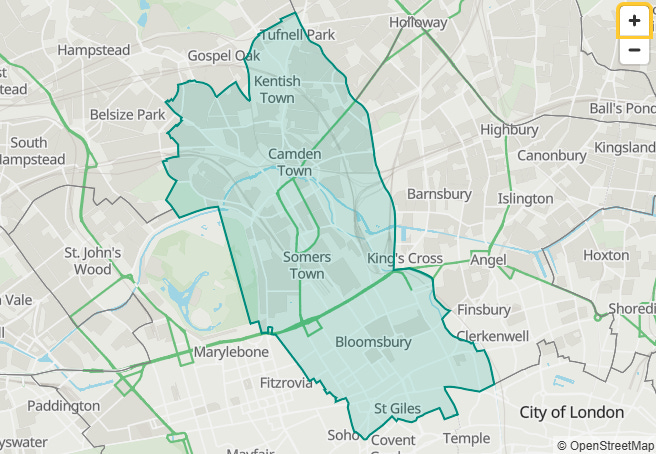
Holborn and St Pancras constituency map
Early political history: A cast of colourful characters
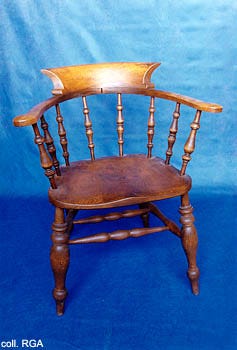
Marx’s chair
A lot of left wing intellectuals have based themselves in and around this patch of London. Karl Marx wrote much of Das Kapital in the British Museum reading room. The Bloomsbury Group met in John Maynard Keynes’ house on Gordon Square. Beatrice and Sydney Webb, co-founders of the Fabian Society, the New Statesman and the London School of Economics, lived and worked nearby. And while the Guardian was founded in Manchester, its journalists today work out of a big glass box near King’s Cross.
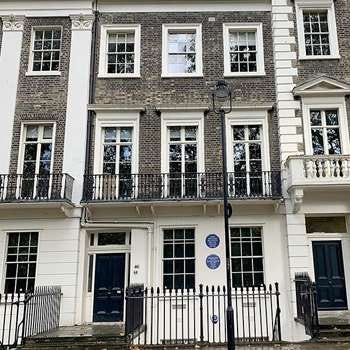
Keynes’ house
Earlier generations of St Pancras voters had opportunities to vote for founders of the British Communist party and the Indian Communist party (though not both at the same time). John Mahon, a founding member of the Communist Party of Great Britain stood in St Pancras North in a by-election in 1949.1 Eighteen years earlier, Shaukat Usmanim, a founding member of the Indian Communist Party, stood as the Communist candidate for St Pancras South East 1931, running from a prison cell in India, where he was awaiting trial for conspiracy against the British colonial government.
An even more influential figure from Indian politics had sought a Westminster seat in Holborn a generation earlier. Dabadhai Naroji stood unsuccesfully for the Liberals in Holborn in 1886 - he would stand for Parliament again and win in Finsbury South six years later, becoming the first ever British Indian MP. Naroji was a co-founder and three time president of the Indian National Congress, the political party which campaigned for Indian independence, then ruled India for decades after the British departed. Naroji’s 1901 book critiquing the British colonial regime “Poverty and un-British rule in India” influenced Mohandas Gandhi, the legendary leader who spearheaded the successful campaign for independence decades later.2
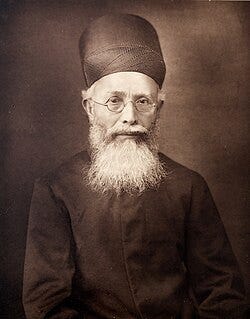
The “Grand Old Man of India” Dabadhai Naroji
Holborn and St Pancras has not only been a hotbed for radicals. There was (and is) a lot of money in this bit of London, and prominent Conservatives have succeeded here too.
Sir Alfred Beit, hailing from a wealthy mining dynasty and distant relative of both the Mitfords and (by marriage) the Churchills was the Conservative MP for St Pancras South East from 1931 to 1945. He later moved to Russborough House in Ireland, where he put his family’s famous art collection, including masterpieces by Vermeer, Goya and Joshua Reynolds, on public display.
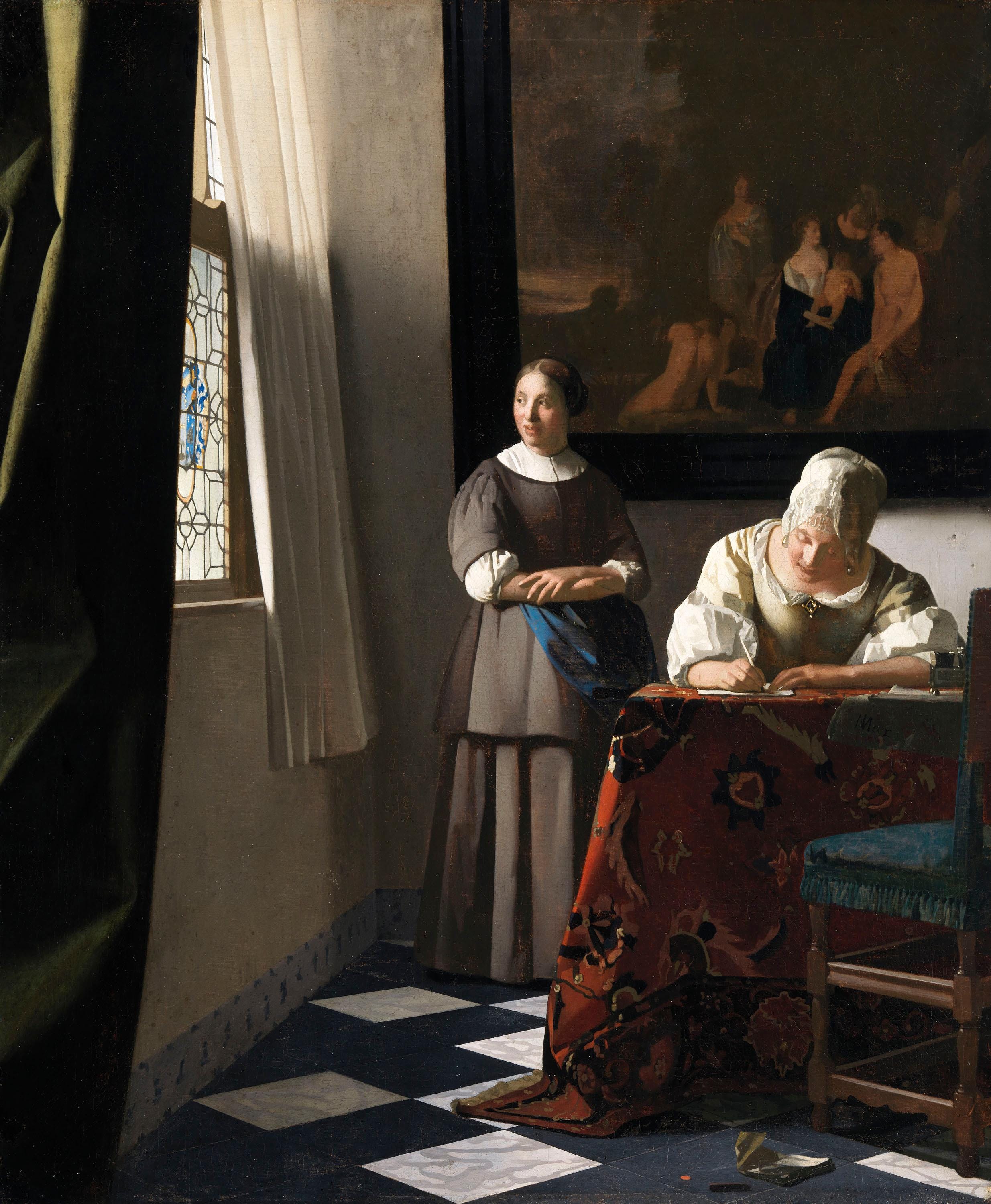
Lady Writing Letter With Her Maid, by Vermeer, once the property of Sir Alfred Beit, briefly the property of the IRA, now part of the National Gallery of Ireland collection
Russborough House became an attractive target for art thieves, with four break-ins between 1974 and 2002. The most famous of these was an audacious IRA robbery in 1974 orchestrated by Rose Dugdale, a wealthy British debutante and relative of Oswald Mosley who became radicalised against the British state while studying PPE at St Anne’s College Oxford.3 The police succeeded in retriving the artworks after each theft, and Beit was later made an honourary citizen of the Irish republic after donating seventeen of his most precious masterpieces to the National Gallery of Ireland.
Another scion to a famous dynasty briefly served as Conservative MP for Holborn (1945-50). Max Aitken Jr was a WWII ace fighter pilot, but perhaps more importantly for his political ambitions, the son of the influential media baron Max Aitken Sr, 1st Baron Beaverbrook.
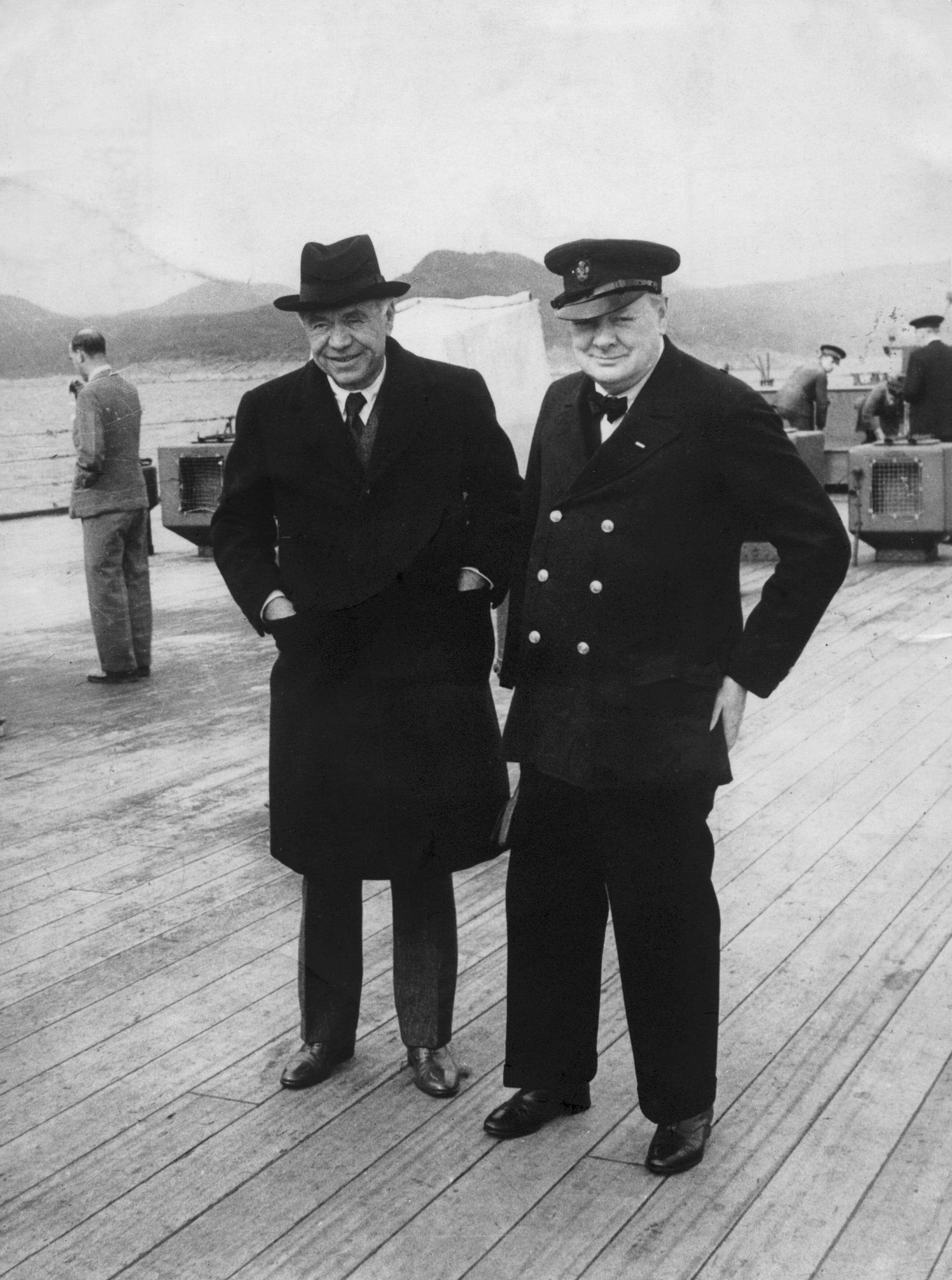
Friends in high place - Beaverbrook Senior with Winston Churchill
Beaverbrook Senior, a Canadian born business man was from 1916 the owner of the Daily Express, the largest circulation newspaper in Britain at the time, and served in Churchill war Cabinet. Beaverbrook Jr served one term before boundary changes helped Labour take his seat. He lost interest in politics (and the press) and took up powerboat racing, founding the London International Boat Show (sponsored by the Daily Express) in 1954.
Postwar history - Labour, Labour, Labour
The post 1945 history of this seat is largely the story of one party (Labour) and three names - Jeger, Dobson and Starmer. Santo Jeger, a GP, former Mayor of Shoreditch and founder of the Socialist Medical Association, was first elected as Labour member for St Pancras South East in 1935, and following boundary changes continued as MP for Holborn and St Pancras South in 1950 and 1951. When Jeger died aged 55 in 1953 his wife Lena, a former vice president of the NUS and London City Councillor for the same area, won the ensuing by-election to replace him. Lena Jeger held the seat until 1979, suffering one defeat to the Conservatives in 1959 but returning as part of the incoming Wilson government in 1964. After over two decades in the Commons, Mrs Jeger went on to an even longer career in the House of Lords, elevated to a life Peerage by James Callaghan on her retirement in 1979, she served there until her death aged 91 in 2007.
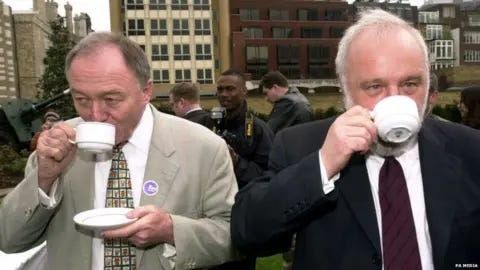
Dobson on the right, Livingstone on the left.
Jeger’s replacement as Holborn and St Pancras South MP was Frank Dobson, who would go on to be a high profile figure in the first New Labour government of Tony Blair, serving as Health Secretary (1997-99) before being nominated as Labour’s first candidate for the newly created post of Mayor of London in 2000. But though London was even then a Labour leaning city, Dobson never became its mayor as the man he defeated in the Labour selection contest, veteran left wing MP and former GLC leader Ken Livingstone, defeated him running as an independent candidate. Dobson remained in Parliament but never returned to the front benches, eventually standing down in 2015 after 36 years as an MP.
Frank Dobson was suceeded in 2015 by Sir Keir Starmer, the former Director of Public Prosecutions who had been active in Labour politics within the area for some time, as he sought to pivot from a long and successful legal career into a second career in politics. Starmer was strongly backed by both the departing left wing veteran Dobson and then Labour leader Ed Miliband. Though a very different leader - Jeremy Corbyn - took over Labour soon after Starmer arrived in Westminster, this did little to slow the new Holborn and St Pancras MP’s rapid rise through theranks. Starmer was a Shadow Minister within months of becoming an MP, and became Labour’s first Shadow Brexit Secretary in 2016. Starmer used this position to signal a more anti-Brexit stance than his leader, a strategy which helped endear him to Labour’s overwhelmingly pro-EU membership. When Corbyn resigned following the 2019 general election defeat, Starmer cashed in the reputatational capital he had built up during the Brexit years, and ran for the leadership as an ardently pro-EU, radically progressive continuity Corbynite.
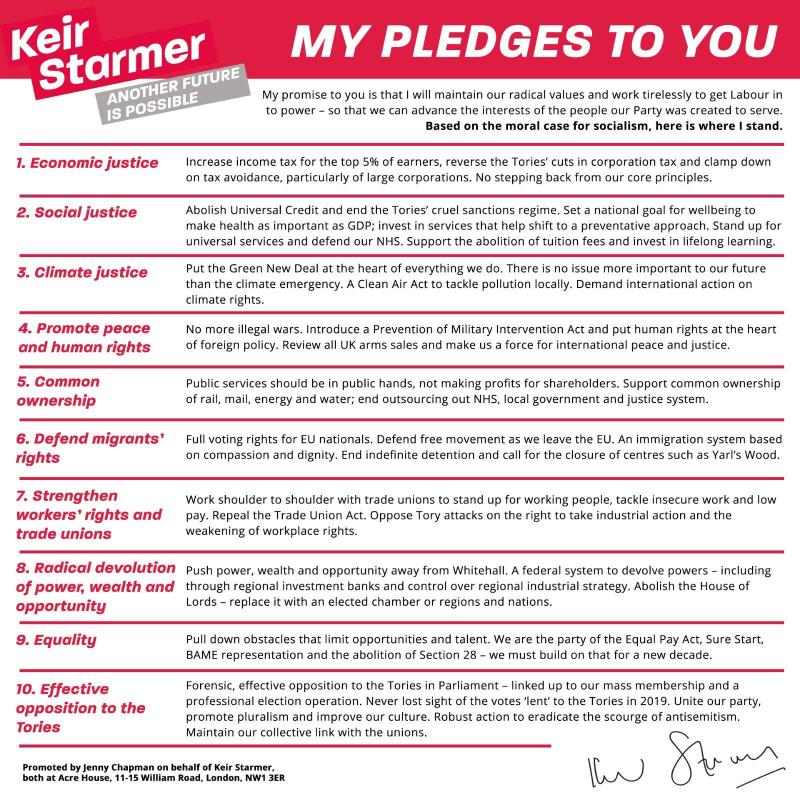
Sir Keir’s Ten Pledges from the 2020 leadership campaign. Not much heard about after he won, though a good case could be made for delivery of Number 10.
Much of this agenda was swiftly abandoned after Starmer won an overwhelming victory in the 2020 Labour leadership contest, as the new Leader of the Opposition sought to shift his party back into the centre ground, a move he and his chief election strategist Morgan McSweeney regarded as essential to make Labour electable again. In 2024, Starmer succeded in delivering Labour’s first general election win since 2005, though this victory was as much down to the failures in office of the Conservative party, and a deep split on the right triggered by the return of Nigel Farage.
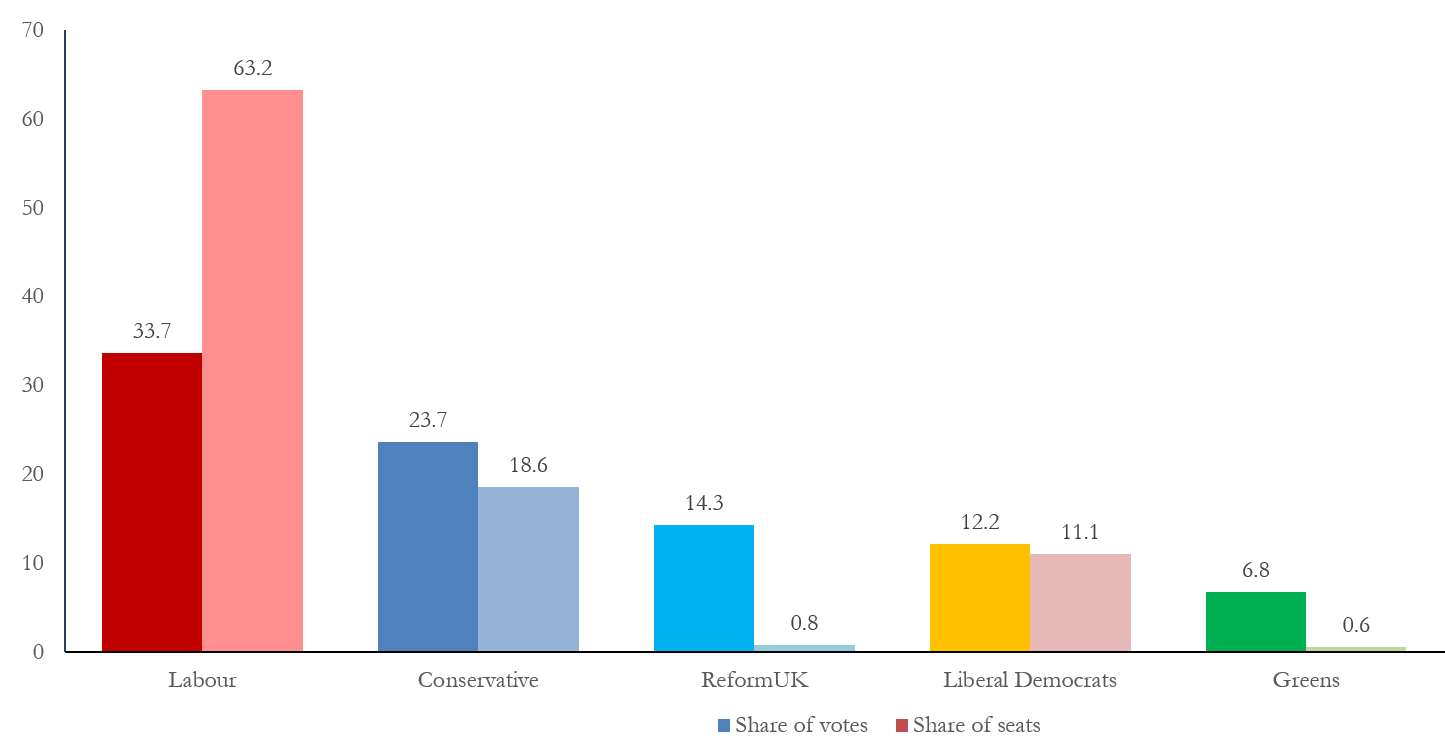
A loveless landslide
Whatever the exact reasons for his success, Labour voters and activists had high hopes for the first Labour government in a generation. These were swiftly disappointed, as the Starmer administration stumbled through a series of blunders and mis-steps, triggering one of the swiftest declines for both party and leader in polling history.
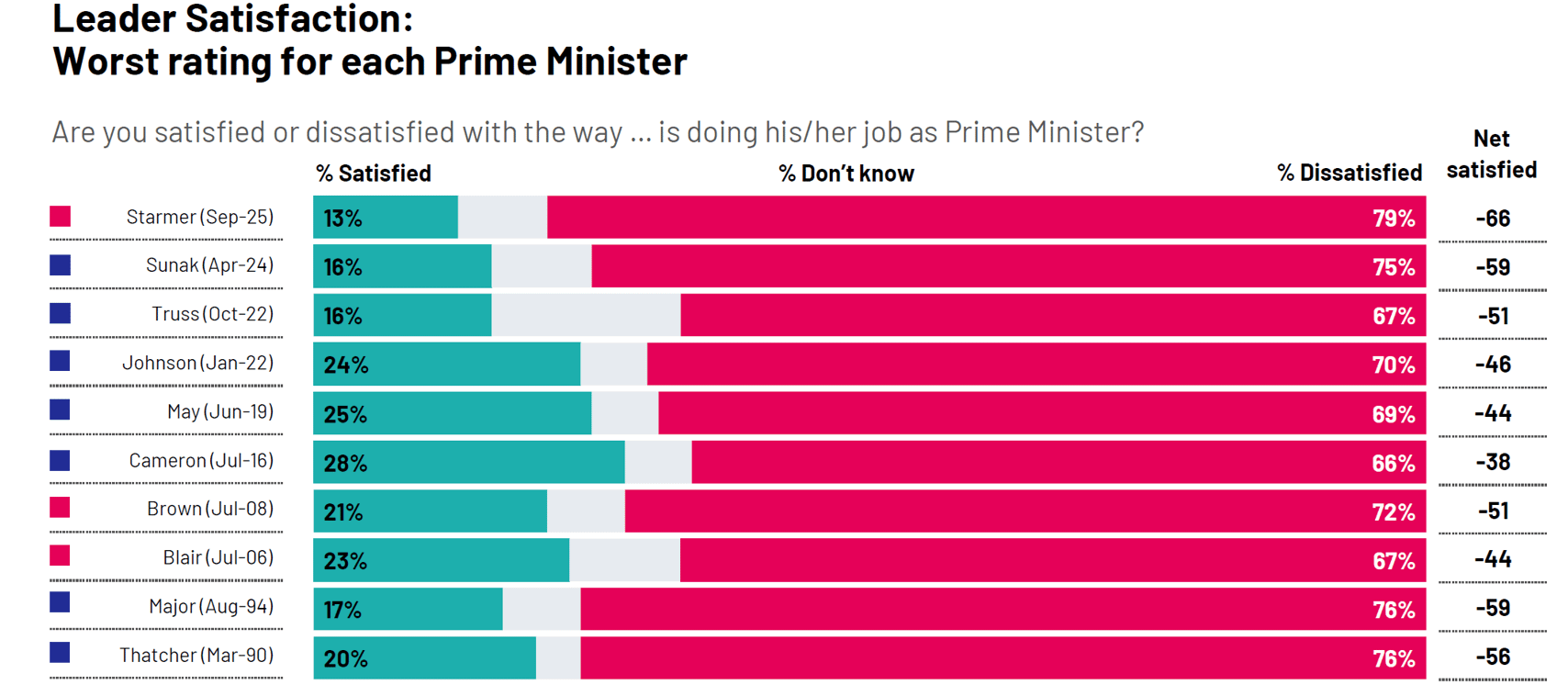
Love’s Labour’s Lost (source: Ipsos)
By the final months of his tenure, Sir Keir Starmer had become the most unpopular Labour party leader in polling history, taken his party to record lows in the polls, and lost three by-elections in formerly rock solid Labour areas in less than a year. Starmer’s fate was sealed in May 2026 when he presided over Labour’s worst ever election results in Scottish and Welsh devolved elections and English local elections. Starmer’s departure from the Commons now provides the first electoral test for his successor Andy Burnham. Starmer three times failed to defend seats in hitherto very safe Labour territory - Runcorn & Helsby, Caerphilly, and Gorton & Denton. Can Burnham do any better when he is not on the ballot himself?
Demographic profile: Not a typical seat. Not even a typical London seat
Holborn and St Pancras is distinctive on practically every demographic indicator available. The seat has exceptionally high shares of twentysomethings, single person households, full time students, graduates, middle class professionals, social renters, private renters, residents born abroad. It has exceptionally low numbers of car owners, home owners, white residents, old residents, working class residents, and families with children. Eighty percent of the England & Wales population live in houses; Ninetly percent of the Holborn & St Pancras population live in flats. This is the very model of a modern city centre seat: a churning engine of upward mobility, sucking in ambitious young people from all over, then spitting them out again to move up and settle down.
Demographic profile of Holborn & St Pancras (red) vs England and Wales (grey)
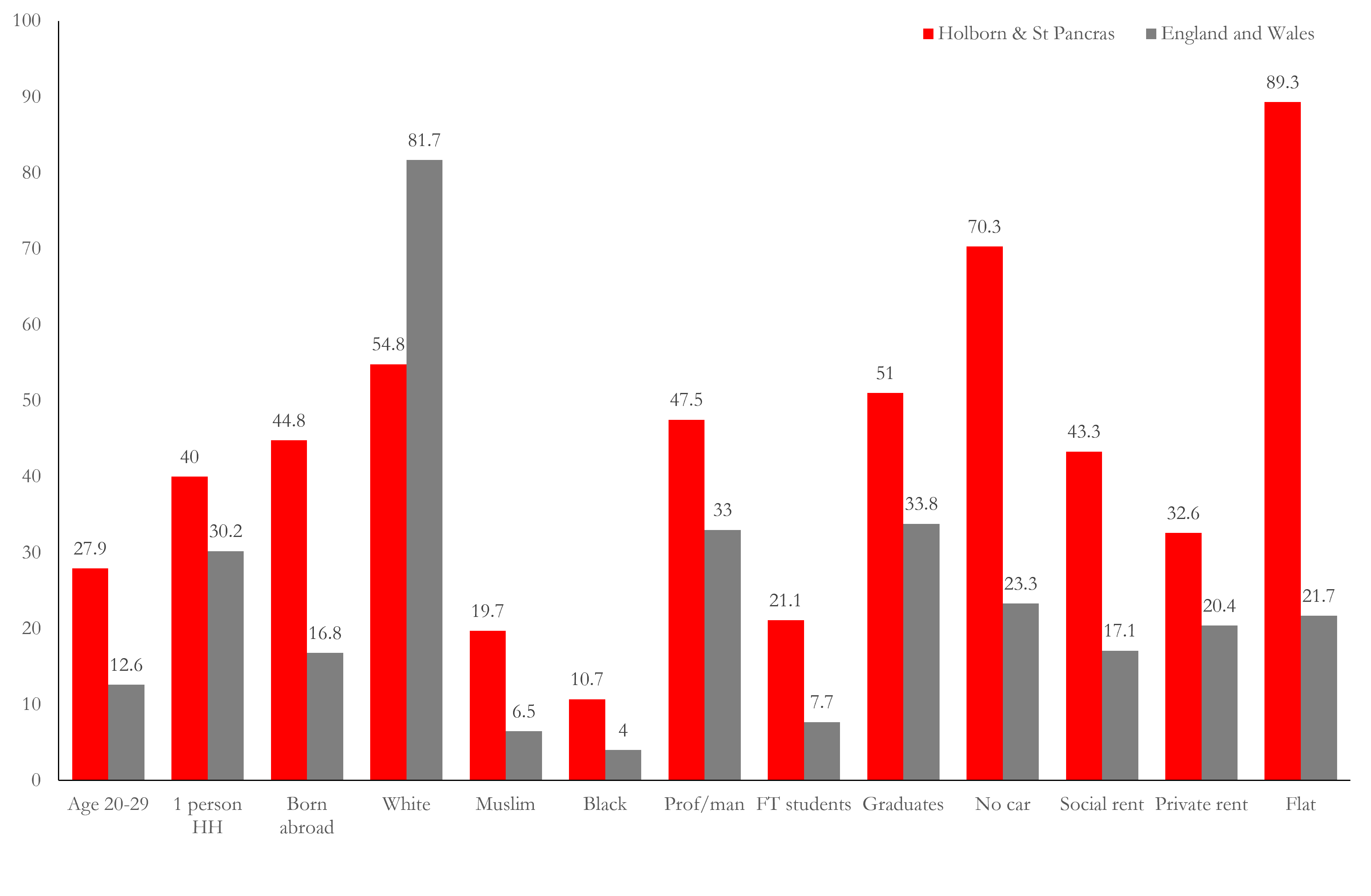
Source: 2021 Census
Though the whole constituency is diverse and variable, there are substantial and consistent differences between the five wards making up the southern half of the seat - Holborn & Covent Garden, King’s Cross, Bloomsbury, Regent’s Park and St Pancras & Somers Town - and the five and a half wards of the northern half - Camden Town, Camden Square, Haverstock, Primrose Hill (part) and Kentish Town South and North.
The North-South divide in Holborn & St Pancras: the Southern wards (grey) are younger, more diverse and more student dominated than the Northern wards (red)
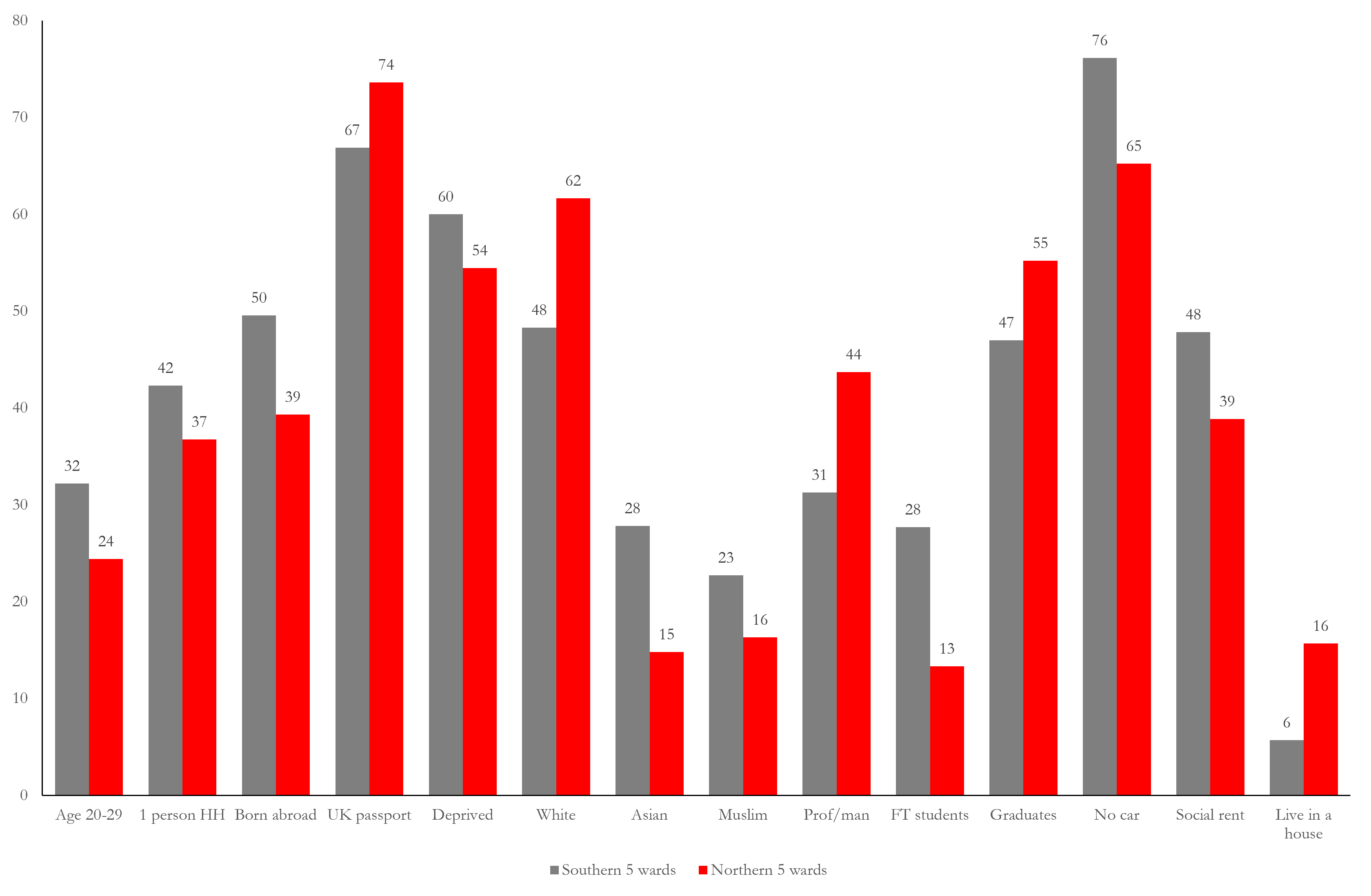
Source: 2021 Census - figures are averages across the Southern five and Northern five wards in the seat. Primrose Hill ward is excluded as only a third of it is in the seat
The resident population in the South of the seat, typically crammed into small flats and student halls, is younger, more diverse, more deprived, more foreign born, and more skewed towards students and singletons. The seat’s Southern wards are majority no-white, majority foreign born, with a third of residents aged 20-29 and nearly three in ten currently in full time education.
The Southern half of the seat is, however, likely to punch below its weight electorally, both because it demographics skew towards harder to mobilise groups (students, ethnic minorities, the more economically deprived) and because a larger portion of residents report they do not have UK passport. Many of these residents will be foreign students or migrant workers who aren’t eligible to vote in next week’s by-election.
The Northern half of the seat takes in somewhat more residential districts in Camden Town, Kentish Town and elsewhere with a (by London standards) more representative population - somewhat older, whiter, more British born, and more settled. Residents here are less likely to be students heading to lecture halls and more likely to be graduate professionals heading to London offices.
Local elections: Zack Polanski’s high stakes gamble
Camden, the London borough where Holborn & St Pancras is located, has proved to be an an attractive place for political high flyers. While the outgoing MP and former Prime Minister never stood for local office in Camden, local election ballot papers in the borough over the past couple of decades have featured three future Green party leaders4, one future (interim) leader of UKIP5, one future Deputy Speaker of the House of Lords6, six future Conservative MPs7 and five future Labour MPs.8
Many of these candidates stood in the more Conservative and Liberal Democrat friendly Camden wards outside of Holborn & St Pancras constituency. However, the wards in the seat itself do exhibit a political north-south divide which loosely maps onto the demographic differences we have already seen. Before 2026, the (somewhat) older, whiter, less student heavy wards in the north of the seat were more politically competitive. The Lib Dems won seats in Camden Town, Kentish Town and Haverstock in 2006, when inner London Labour voters swung heavily against an unpopular post Iraq war Blair government, and also competitive in elections either side of this. King’s Cross, Regent’s Park and St Pancras/Somers Town all stayed solidly red all throughout the 2000s and 2010s.
This May’s local elections shook up that past pattern, as the south of the seat swung more heavily away from Labour than the north. Seven of the ten Green gains in Camden came in three wards in the southern half of Holborn & St Pancras - three each in Regent’s Park and in Holborn & Covent Garden, and one in Bloomsbury. Labour lost no seats to the Greens in the northern five wards of the constituency, though they had some close shaves.
Labour and Green performances in Holborn and St Pancras wards
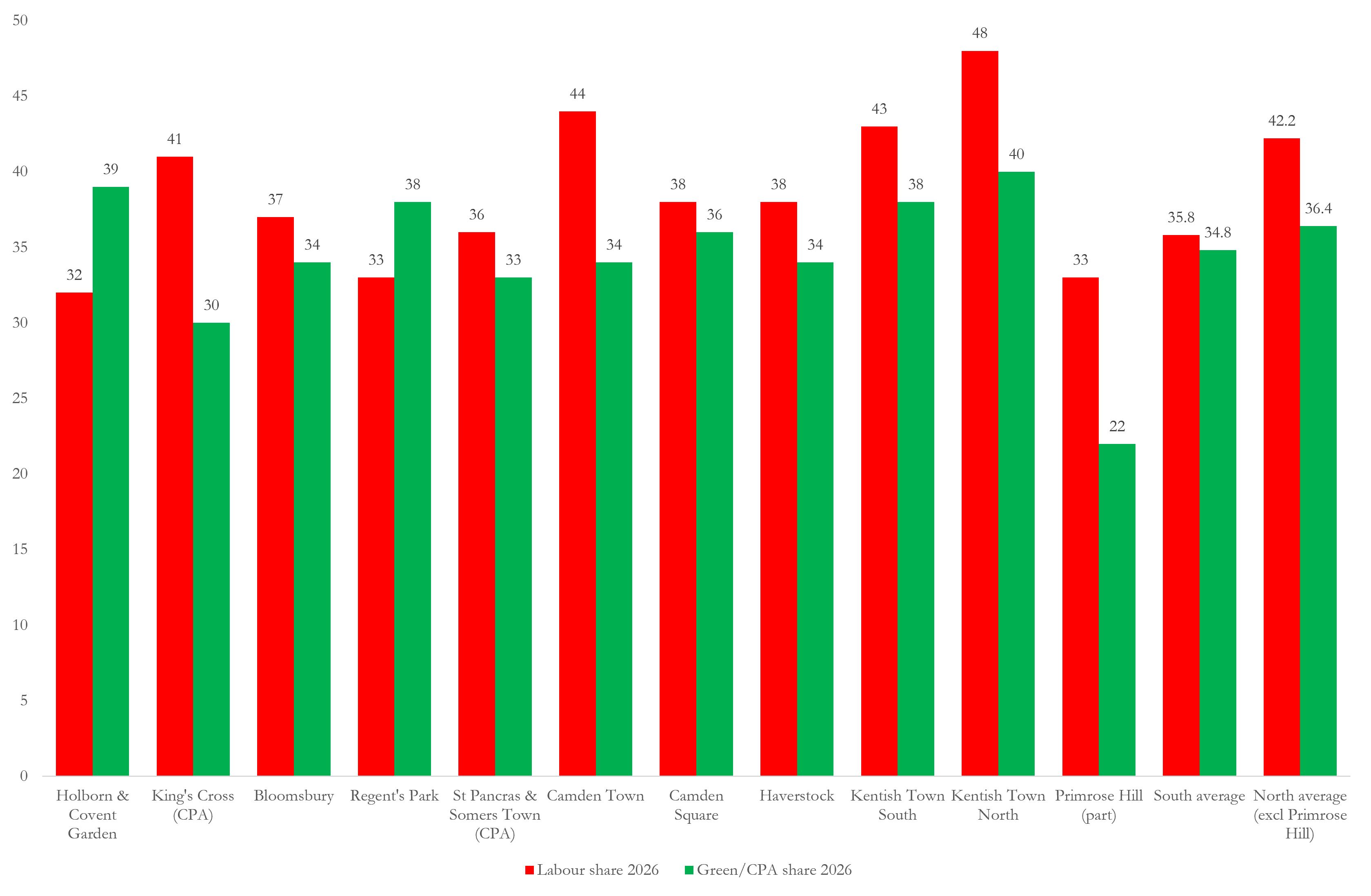
The Greens might have done even better in the Southern wards. The party stood aside for the radical left “Camden People’s Alliance” (CPA) in King’s Cross and St Pancras/Somers Town wards. The relatively obscure CPA managed one gain from Labour, but won an average share several points below Green performances in neighbouring wards.
Although the deal with the CPA may have set the Camden Greens back in the spring, it is paying dividends for the party’s leader now. The CPA’s founder and leader Andrew Feinstein, who had come second to Sir Keir Starmer in the 2024 election in Holborn & St Pancras, has endorsed Zack Polanski in this by-election, so we may expect most of his party’s support from May to fold in behind the Greens.
Labour beat the Greens/CPA by an average of just 1 per cent in the southern five wards of the seat, but by a more comfortable six per cent in the northern five wards (excluding Primrose Hill ward, where only about a third of voters are in the constituency). The Greens’ likeliest path to victory will come through running up the score in these southern wards, consolidating CPA votes from May and outperforming their own local election showings with the younger and more diverse residents of these wards, despite the less favourable national climate.
Labour’s goal wil be to hold off Green advances in the southern wards while cementing their advantage in the northern wards, where a slightly older, whiter and more middle class electorate stuck with the party even at its May low ebb.
Candidates: a leader leaves, a leader arrives, and the Cat in the Hat returns
Sagal Abdi-Wali (Labour) During Keir Starmer’s six years as leader of Labour, the party lost a lot of young progressive voters who believed that Starmer’s positions on issues such as the treatment of refugees was at odds with their liberal values, while also losing a lot of Muslim voters who felt Starmer’s Labour no longer listened to their concerns.
The selection of Sagal Abdi-Wali, a Somali origin Muslim who arrived in Britain as a child refugee and has risen to become leader of Camden council, may do much to address such concerns. Abdi-Wali knows the electoral threat of the Greens well - she held off a Green challenge in her ward by just 60 votes, and only became leader of the council in May after the Greens defeated her predecessor Richard Olszewski.
In ideology and substance Abdi-Wali is a mainstream Labour candidate who was a close ally of Starmer when he was the local MP and has worked her way up local and national power structures. The Corbynite left - still a noisy presence in this part of north London - aren’t very enthused by her candidacy, judging by this recent Tribune article titled “The Dark Arts of Camden Labour”.
But the selection of a young Muslim woman with deep roots in the seat and a powerful personal story if likely to help Labour reconnect with the area’s large migrant and Muslim communities, and even progressive radicals who still distrust the national Labour party on refugee rights and much else will find the prospect of electing a woman who fled to Britain as a child as their local MP an attractive one.
Zack Polanski (Green) Zack Polanski has made no secret of his ambitions to stand for Westminster in a London contest, but he may now regret comments made on the local elections campaign trail indicating a willingness to run against Keir Starmer. This made it hard for the Green leader to decline this seat once Starmer vacated it, even though neither the timing nor the seat itself are ideal. Polanski might have preferred to run later, in one of the boroughs further east captured by the Greens in May, such has his home borough of Hackney.
Polanski’s electoral track record is mixed. He first ran for office in one of this seat’s wards - coming last as the Liberal Democrat candidate in the 2015 St Pancras & Somers Town by-election, and then fourth out of five standing as the Lib Dem candidate for Barnet & Camden in the 2016 London Assembly elections. His first outings as a Green candidate were equally undistinguished, finishing 11th out of 11 standing for Westminster High Street ward in the 2018 Westminster council elections, then fourth out of four in a by-election in Lancaster Gate ward.
After finishing fourth as the Green candidate for Cities of London and Westminster, Polanski, and fourth in another Westminster council by-election, Polanski won elected office at the eighth attempt as a candidate on the citywide list in the London Assembly elections of 2021. His ascent since has been rapid - he won election as the party’s deputy leader in 2022, and then an overwhelming victory in the 2025 Green leadership contest, just four years after first securing an elected office.
Polanski’s first six months as leader were studded with successes - the party membership surged, the Greens rose in the polls, and won their first ever by-election victory over Labour, and first ever seat in the North of England, at the Gorton & Denton by-election. Since then the tide has been slowly going out - though the party made impressive gains in May’s local elections, these fell short of the party’s hopes, as Labour incumbents proved more resilient than expected, particularly in better off parts of London (such a Camden).
Both Green poll ratings and Polanski’s personal approvals were fading by this point, a fall which has accelerated since Andy Burnham’s arrival as Labour leader. A by-election which just a few months ago would have been seen as a chance for Polanski to personally put the capstone on the Greens’ breakthrough with an easy gain is now being seen instead as a battle against the odds, with Labour resurgent and the Greens in retreat.
George Galloway (Workers Party) - The return of fedora afectionado, reality TV star and veteran by-election bloviator George Galloway adds a further complication for beleaguered Green campaigners. Galloway has been riling up disaffected Muslim voters with bombastic street campaigns for two decades now. He has shown a remarkable talent for identifying and promoting divisive and dubious claims which weaken his opponents while boosting his own profile, though rather less talent for actually representing the places that have elected him, or holding on to the seats he has won.
Muslim share of the local population and George Galloway share of the vote in Bethnal Green and Bow (2005 general election) and three by-elections since 2012
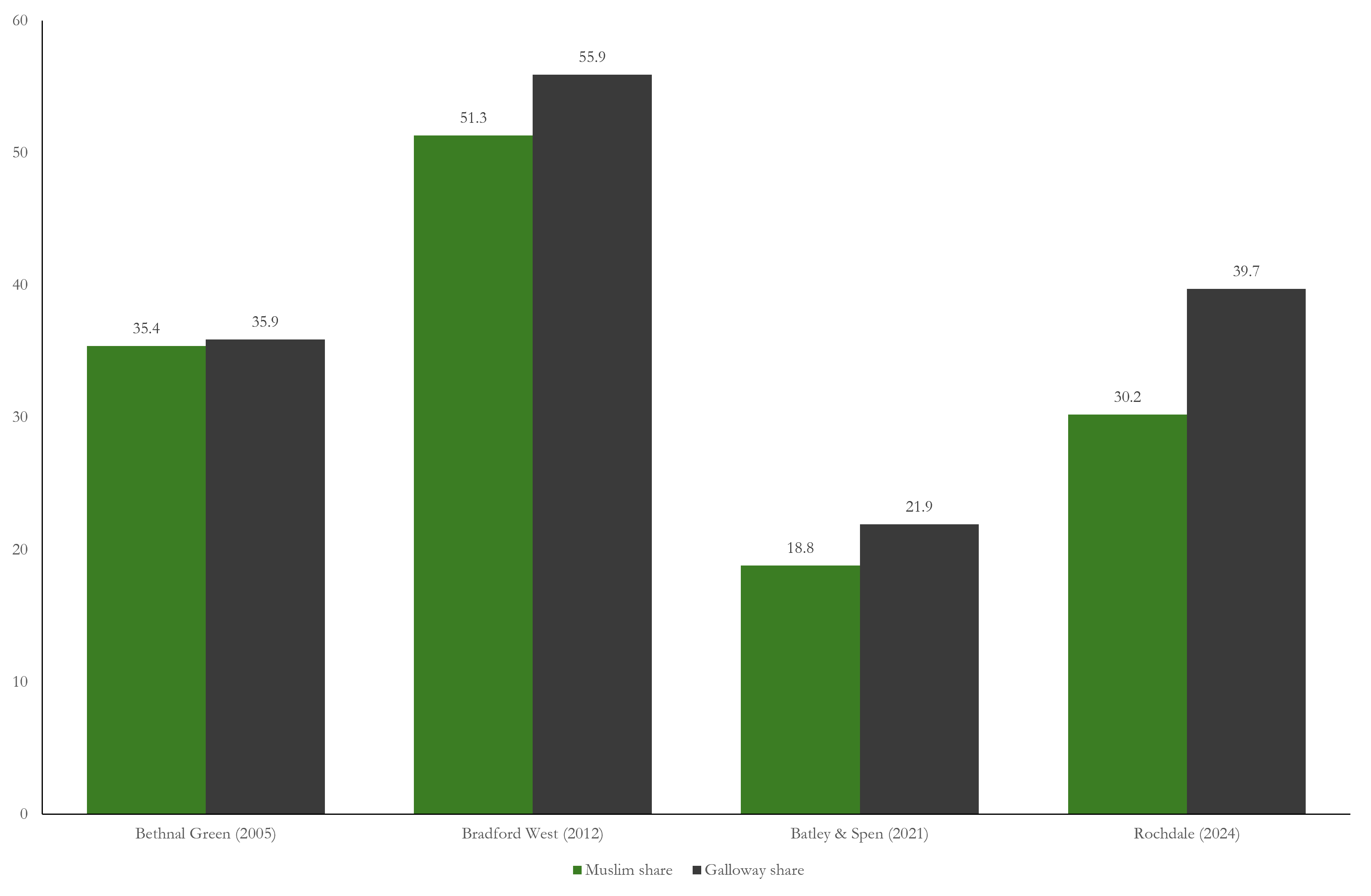
Muslim vote share from 2011 Census (Bethnal Green, Bradford West) and 2021 Census (Batley & Spen, Rochdale)
Two factors may, however, put a lid on Galloway’s appeal this time. Firstly, the Muslim community in this seat, though substantial (20%), is much smaller and more diverse than those in the three Westminster seats he has won since 2005 (see graph above). Secondly, Galloway himself will not be circulating the streets armed with his trusty megaphone. Though his name is on the ballot paper, Galloway has remained in self-imposed exile in Russia. An online only bullhorn may well prove less effective.
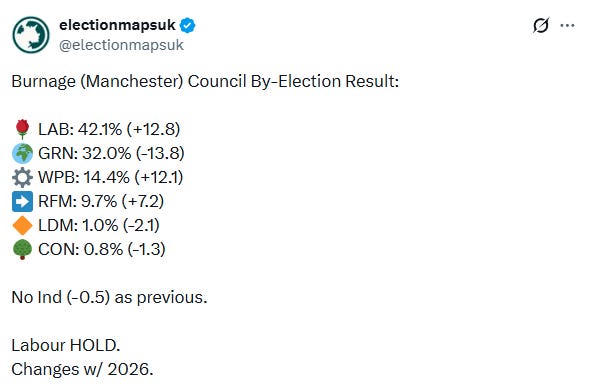
But while Galloway is unlikely to win himself, he may well end up helping Labour by peeling off disaffected and radical young Muslim voters who would otherwise have backed the Greens. There is recent precedent: a few weeks ago Labour held the Manchester city council ward of Burnage, vacated by the newly elected GM Mayor Bev Craig. Labour’s margin of victory over the Greens in that contest was smaller than the vote won by the Workers Party candidate.
The undercard: The main goal for Patrick Stillman of the Liberal Democrats and Ewan Cameron of the Conservatives will be to try and save their parties’ deposits in this contests, and avoid going into the record books as the worst performing candidates for their parties in any Westminster contest, beating records already set for both parties this year.9
While Reform UK are unlikely to poll well in this young and diverse patch of London, their candidate Peter Newman will still be keen to consolidate the radical right vote and see off the growing threat on the far right from Restore Britain, who are also running in this seat and who made a major advance, most likely at Reform’s expense, in the recent Greater Manchester Mayoral by-election. Evidence from recent local by-elections suggest Restore may already be costing Reform council seats.
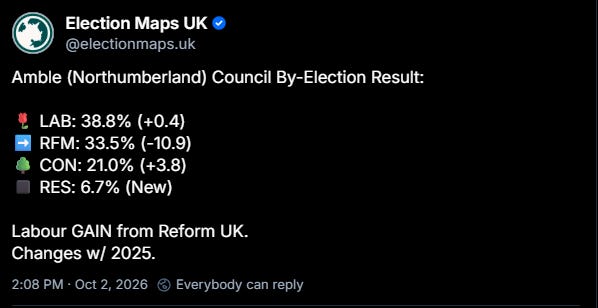
Splitters!
None of the other candidates is likely to make much of an impact, though in the absence of Count Binface (taking a well deserved break on his spacecraft), podium light relief will be provided by Barmy Brunch, the baked bean balaclava clad official candidate of the Monster Raving Loony Party. Mr Brunch’s policies include a peerage for Larry the cat, a referendum on Britain’s Eurovision membership and, naturally, a mandatory brunch hour.
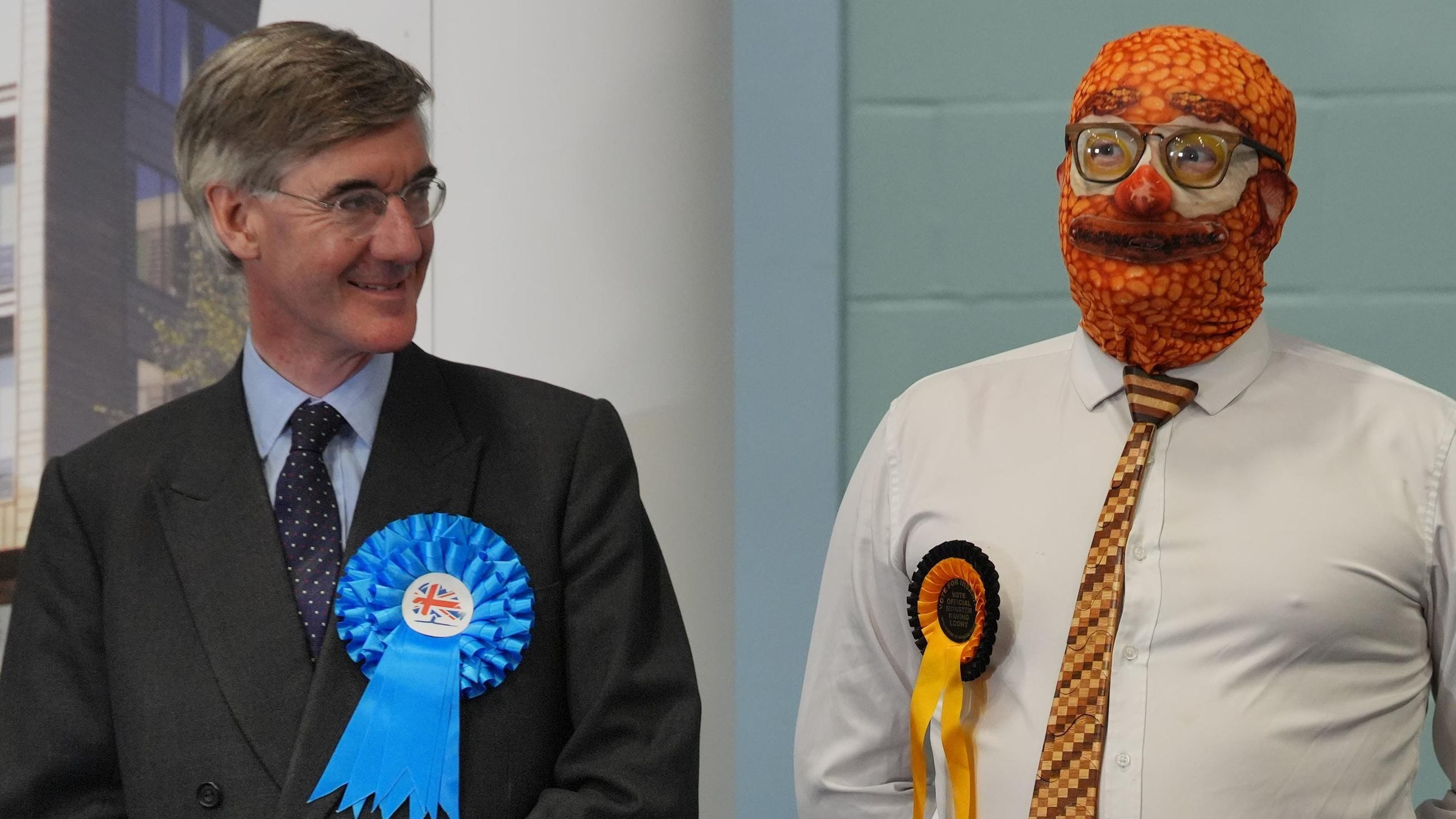
A raving loony politician. And Barmy Brunch.
The verdict: Polanski’s gamble looks like it may backfire…but by-elections can surprise
Holborn & St Pancras will be a crucial early test of Andy Burnham’s capacity to hold together a broad Labour electoral coalition. It sits on the opposite edge of the Labour big tent to Makerfield, the seat Burnham himself won in June. Burnham saw off Reform to hold a North of England seat of commuter towns with a middle aged, overwhelmingly white and British born electorate. Now Prime Minister who rose to power as the “King of the North” needs to show he can also win in a young, ethnically diverse seat full of students and council flats in the very heart of the capital he often criticises.
Burnham’s extended honeymoon with the electorate, and the Greens’ decline in the polls mean Labour go into this contest as heavy favourites. After all, if the Greens could not take Camden when Labour were hitting rock bottom with Starmer, what chance do they have now? But by-elections have a track record of delivering surprises, particularly when high profile figures are on the ballot. If Zack Polanski and his army of Green activists can convince local voters that the contest represents a low risk opportunity to send a warning shot across the bows of the new Labour leadership, they may yet be able to mobilise lingering distrust of Labour among voters still angry at being marginalised during the Starmer years.
It is rumoured that Dominic Cummings wanted to use the slogan “Tell Them Again” in the event of a second EU referendum. A similar message could yet reignite the smouldering resentment of young progressives still sore at the perceived betrayals of the Starmer years, and help Zack Polanski win against the odds next week. Burnham’s rise changed the political weather this summer. But the weather could yet change again next week.
The Seventh General Secretary of the Communist Party of Great Britain, Gordon McLennan, also stood and came last twice in St Pancras North in 1970 and February 1974. The Conservative runner up in the seat on the second occasion was an ambitious young working class Londoner making his first run for Parliament. John Major would fail twice that year in the seat, before finding success five years later in Huntingdonshire.
In 2014 Deputy Prime Minister Nick Clegg introduced the Dabadhai Naoroji awards to honour contributions to UK-India relations by British or Indian nationals. The first three winners - Madhav Sharma, Asha Khemka and Patricia Hewitt - are the only recipients to date as Clegg’s initiative didn’t spark much interest and hasn’t been continued by any of his successors.
Before robbing Alfred Beit, Dugdale raised funds for the IRA by robbing her own parents, making off with £82,000 worth of paintings and silverware after breaking into the family’s country house in Devon. At the resulting trial, Dugdale cross-examined her own father, a witness for the prosecution, telling him “I love you but I hate everything you stand for.” Dugdale was given a suspended sentence as the presiding judge considered the risk of further criminality “extremely remote”. She broke into Beit’s mansion a few months later.
Natalie Bennett, Green candidate in Regent’s Park ward (2006) and Somers Town ward (2010) and Green leader (2012-16); Sian Berry, elected to Camden council for Highgate ward in 2014 (her third attempt); Green co-leader 2018-21; and Zack Polanski himself, who stood as a Liberal Democrat candidate in a by-election in St Pancras and Somers Town ward in 2015 (he finished in last place, well behind the Green party, who he would join two years later). Sharhar Ali, Green Deputy Leader from 2014-16 was also a Camden council candidate.
Piers Wauchope, Conservative councillor for Belsize ward (2002-6) and interim leader of UKIP (June-August 2019).
Susan Garden, Liberal Democrat candidate in Frognal and Fitzjohns (2002), Life Peer since 2007 and Deputy Speaker of the House of Lords since 2018
Jesse Norman, Conservative candidate for Camden Town and Primrose Hill (2006) and MP for Hereford and South Herefordshre (2010-date); Chris Philp, Conservative councillor for Gospel Oak ward (2006-10) and Conservative MP for Croydon South (2015-date), currently Shadow Home Secretary; Sam Gyimah, Conservative candidate for Kilburn ward (2006), Conservative then Liberal Democrat MP for East Surrey (2010-19); James Morris, Conservative candidate for Regent’s Park ward (2006) then Conservative MP for Halesowen and Rowley Regis (2010-24); Laura Trott, Conservative councillor for Frognal & Fitzjohns ward (2010-14) and MP for Sevenoaks (2019-date), currently Shadow Education Secretary; Siobhan Bailie (Frognal & Fitzjohns ward 2014-18), MP for Stroud (2019-24). Henry Newman, current Chief of Staff for Conservative leader Kemi Badenoch is also a former Camden councillor (Frognal & Fitzjohns ward 2018-22)
Nick Smith (Kings Cross ward, 1998-2006) and MP for Blaenau Gwent & Rhymnet (2010-24); Georgia Gould (Kentish Town ward 2014-24 and leader of Camden council 2017-24), MP for Queen’s Park & Maida Vale (2024-date); Tulip Siddiq (Regent’s Park ward 2010-14), MP for Hampstead & Highgate (2015-date); Danny Beales (Cantelowes ward 2014-22), MP for Uxbridge & South Ruislip (2024-date); Lloyd Hatton (Kilburn ward 2022-24), MP for South Dorset (2024-date);
The Liberal Democrat candidate in Makerfield, Jake Austin, polled just 0.4% of the vote, comfortably beating the previous record low set a decade earlier. Both of the worst ever Conservative Westminster by-election performances have come this year - Michael Winstanley polled 2.2% in Makerfield, while Charlotte Cadden did even worse in Gorton & Denton managing just 1.9%.
Jeger, not Jegar.
Polanski’s position as leader should really be seen as untenable following the adoption by the Green Party of that ridiculous and racist motion on Zionism.